

Biblical Background
Naomi’s Context: Naomi was a woman from Bethlehem who moved to Moab during a famine with her husband and two sons (Ruth 1:1–2).
Tragedy and Loss: Naomi experienced profound loss—her husband and both sons died, leaving her in deep grief (Ruth 1:3–5).
Return to Bethlehem: She returned to her homeland with her daughter-in-law Ruth, expressing both bitterness and hope (Ruth 1:6–18).
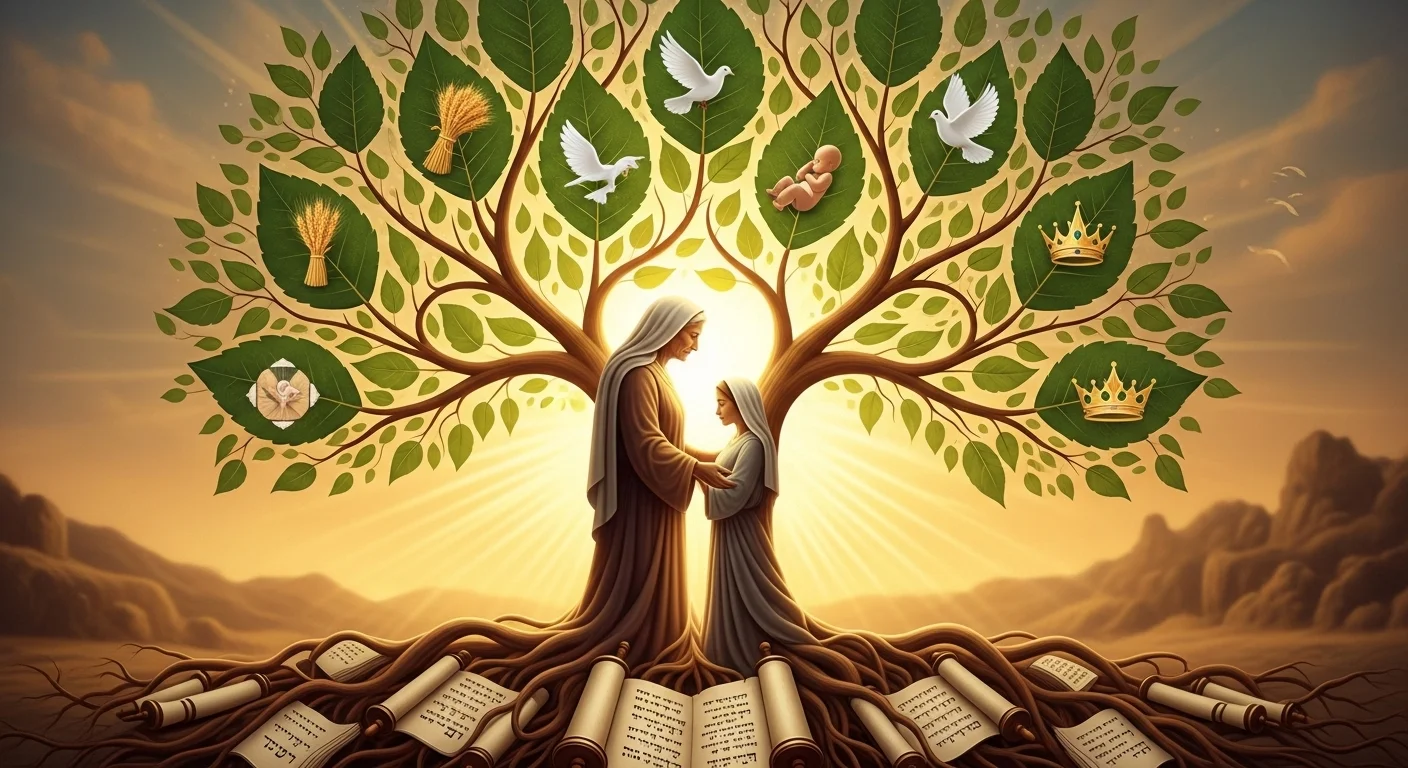
Key Legacy: Naomi’s guidance and faith paved the way for Ruth’s marriage to Boaz, making Naomi an ancestor in the lineage of Jesus Christ (Matthew 1:5–6).
The Spiritual Significance and Legacy of Naomi’s Spiritual Interpretations
1. Trusting God in Times of Loss
Verse: “The Lord gives and the Lord takes away; blessed be the name of the Lord.” — Job 1:21
Naomi’s initial grief reflects the pain of loss and human sorrow, but her journey shows the importance of turning to God even in despair.
Reflection: Life may bring unexpected trials, but God’s providence can restore hope and purpose.
Guidance: Lean on God’s promises during hardships, trusting that He works all things for good (Romans 8:28).
2. God’s Providence in Unexpected Ways
Verse: “And Ruth said, ‘Where you go I will go, and where you lodge I will lodge. Your people shall be my people, and your God my God.’” — Ruth 1:16
Through Ruth’s loyalty and faith, Naomi witnessed God’s provision and blessing, even after great loss. Her story highlights that God often works behind the scenes to bring restoration.
Reflection: Even when circumstances seem bleak, God’s plan can lead to redemption and blessing.
Guidance: Stay faithful, trust God’s providence, and embrace the opportunities He provides.
3. Transformation from Bitterness to Hope
Verse: “Do not call me Naomi; call me Mara, for the Almighty has dealt very bitterly with me.” — Ruth 1:20
Naomi initially identifies with bitterness (Mara), but by the end of the story, her life is marked by restoration, joy, and purpose.
Reflection: God can transform sorrow into hope, and despair into renewed life.
Guidance: Offer your pain to God in prayer and allow Him to bring healing and renewal.
4. Leaving a Spiritual Legacy
Verse: “So Boaz took Ruth, and she became his wife; and when she bore a son, they called his name Obed. He was the father of Jesse, the father of David.” — Ruth 4:13–17
Naomi’s faithfulness and wise guidance influenced the next generation, eventually impacting God’s redemptive plan through Christ.
Reflection: Our lives, choices, and faithfulness can leave a spiritual legacy that touches generations.
Guidance: Live intentionally, mentor others in faith, and sow seeds of righteousness for future impact.
5. Faithful Companionship and Godly Relationships
Verse: “But Ruth said, ‘Do not urge me to leave you or to return from following you. For where you go I will go…’” — Ruth 1:16
Naomi’s relationship with Ruth exemplifies faithful mentorship, guidance, and mutual devotion, which God honors.
Reflection: Spiritual guidance, love, and loyalty in relationships can reflect God’s care and purpose.
Guidance: Invest in relationships that honor God, provide mentorship, and nurture faith in others.
Lessons and Applications Today
Trust God Amid Trials: God’s plan is often revealed gradually through perseverance and faith.
Look for God’s Providence: Even in loss, God works to bring blessing and restoration.
Transform Bitterness to Hope: Prayer, faith, and obedience allow God to turn sorrow into joy.
Leave a Faithful Legacy: Spiritual influence can ripple across generations.
Value Godly Relationships: Mentorship, loyalty, and love strengthen faith communitie