
Symbolic and Cultural Background
The poison tree concept originates from literature and mythology:
William Blake’s Poem “A Poison Tree” (1794):
Blake used the poison tree as a metaphor for repressed anger, grudges, and the consequences of unexpressed emotions. The poem warns that bottled-up resentment can grow into destructive forces if not dealt with properly.General Symbolism:
Danger, toxicity, or betrayal
Hidden threats or deception
Transformation through struggle
Awareness of personal boundaries
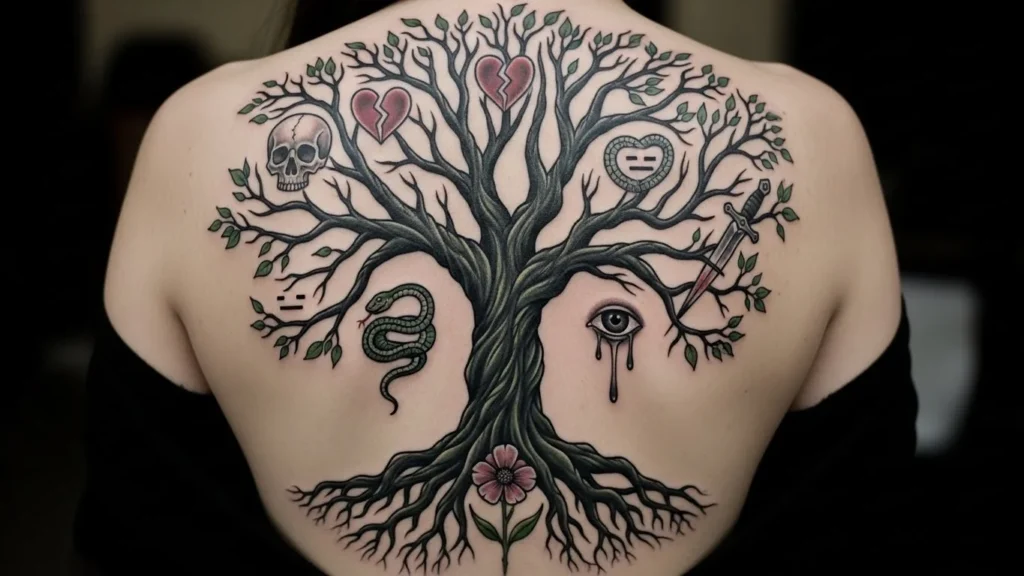
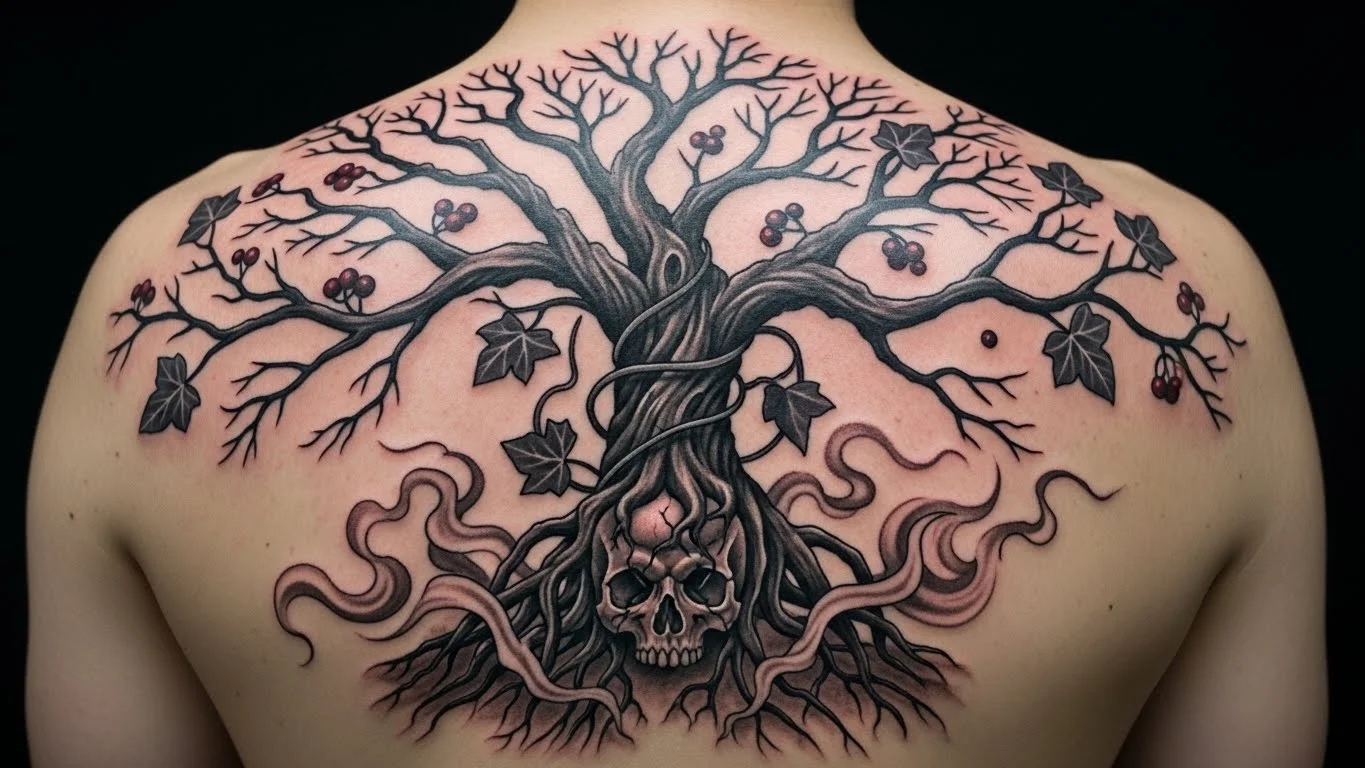
In tattoo art, the tree may appear with dark leaves, thorns, or fruit, emphasizing caution, resilience, and self-awareness.
Spiritual Interpretations
Warning Against Inner Corruption
Meaning: A poison tree tattoo can remind the wearer to guard against negative emotions like anger, jealousy, or resentment that can “poison” the soul.
Reflection: It symbolizes vigilance in personal growth and emotional well-being.Acknowledgment of Life’s Harsh Lessons
Meaning: Trees endure storms, harsh conditions, and time. A poison tree tattoo can symbolize learning from betrayal, pain, or toxic experiences.
Reflection: Wearers often use it as a badge of resilience and wisdom.Embracing Duality of Life
Meaning: Like a tree that produces both beauty and poison, it represents the balance of light and darkness within life or human nature.
Reflection: Encourages self-awareness and mindful decisions, reminding one that appearances can be deceiving.Personal Boundaries and Protection
Meaning: The poisonous aspect of the tree can signify strength and self-protection, warning others not to cross boundaries.
Reflection: The tattoo can act as both a reminder and a statement of personal empowerment.
Variations in Design and Meaning
Tree with Dark Fruit: Represents hidden danger, consequences of repressed emotions.
Tree with Thorns: Symbolizes protection, strength, and personal boundaries.
With Flowers or Blossoms: Indicates growth, beauty, and lessons learned despite toxicity.
With Roots Showing: Deep connection to personal experiences and learned wisdom.
The colors, style, and accompanying elements (like skulls, snakes, or ravens) can add layers of meaning about danger, mortality, or transformation.
Psychological and Personal Significance
Processing Trauma: The tattoo can symbolize dealing with past trauma or toxic relationships.
Self-Reflection: Serves as a reminder to manage emotions, avoid bitterness, and grow from challenges.
Empowerment: Acts as a visual declaration of personal strength, resilience, and awareness.