

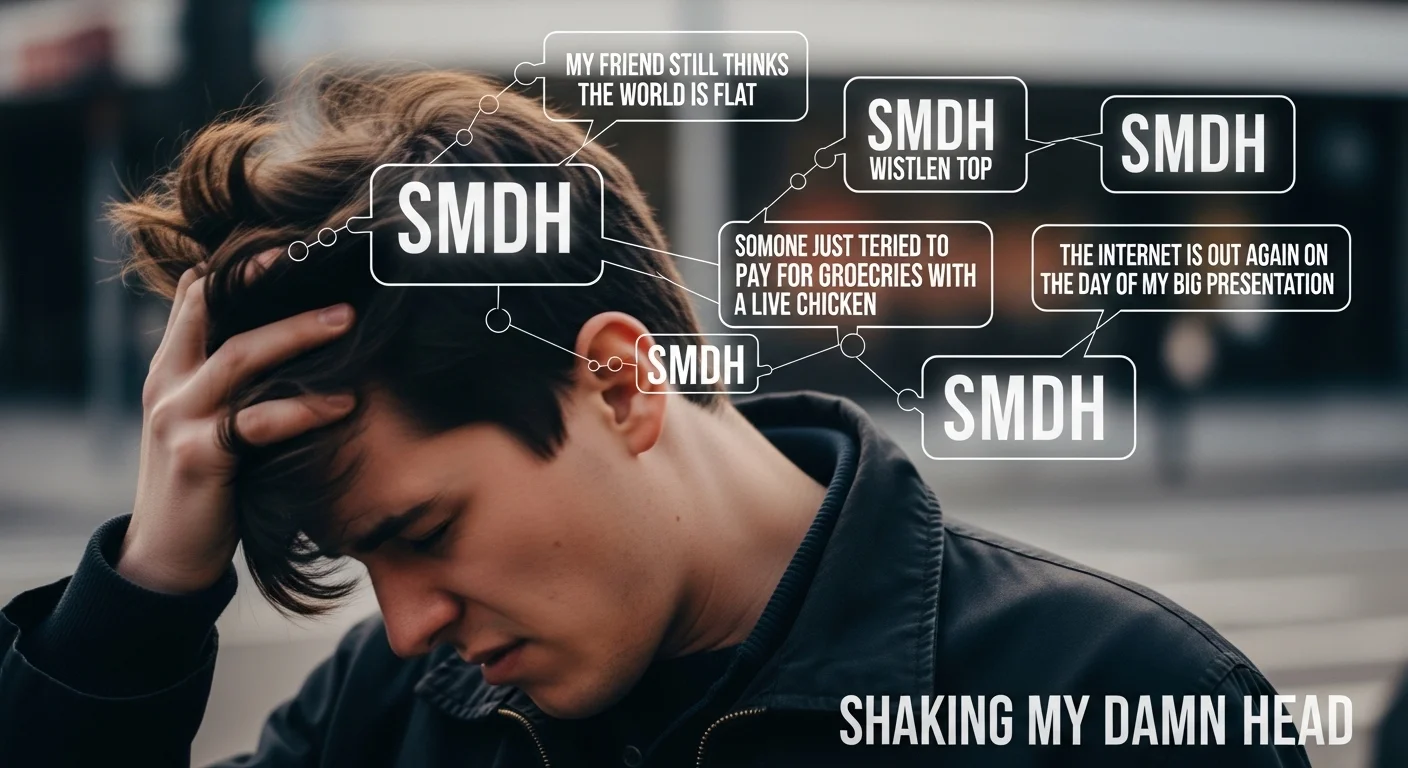
Linguistic and Cultural Background
SMDH stands for: “Shaking My Damn Head”.
Meaning: It expresses disbelief, frustration, disappointment, or exasperation at something someone has said or done.
Usage: Often seen in social media posts, memes, and text messaging to react humorously or sarcastically to frustrating or ridiculous situations.
Example:
“He forgot his homework again… SMDH.”
Tone: Informal, sometimes humorous, sometimes critical, depending on context.
Spiritual and Biblical Reflection
While SMDH is not a biblical term, Christians can reflect spiritually on the emotions it represents—frustration, disbelief, or disappointment:
1. Practicing Patience
Verse: “Be completely humble and gentle; be patient, bearing with one another in love.” — Ephesians 4:2
Instead of shaking our heads in frustration, believers are encouraged to respond with patience and compassion.
Reflection: Online and offline frustrations can become opportunities to practice Christ-like patience and understanding.
2. Avoiding Judgment or Condemnation
Verse: “Do not judge, or you too will be judged.” — Matthew 7:1
Reacting with exasperation or ridicule can slip into judgment. SMDH reminds us to examine our heart responses to people’s mistakes or foolishness.
Reflection: We can feel disbelief or disappointment without condemning others, showing grace instead.
3. Responding Wisely to Frustration
Verse: “A gentle answer turns away wrath, but a harsh word stirs up anger.” — Proverbs 15:1
Instead of expressing SMDH in anger, Christians can respond constructively or pray for guidance, turning moments of frustration into growth opportunities.
Reflection: Digital interactions can be channels for demonstrating love, patience, and self-control.
Examples or Variations
SMH: Shaking My Head (less intense, general frustration).
SMDH: Adds emphasis with “damn,” showing stronger disbelief or annoyance.
Emoji Versions: 🤦♂️, 🤦♀️, or 😩 can substitute or accompany SMDH.
In Context:
Humor: “I just dropped my phone in the toilet… SMDH.”
Disapproval: “He lied again… SMDH.”
Faith-Based Guidance
Pause Before Reacting
Reflect before expressing frustration online to avoid harsh words or judgment.Practice Grace
Choose patience, understanding, and compassion in response to others’ mistakes.Prayer for Self-Control
“Lord, help me respond with love, patience, and wisdom even when I am frustrated.”Promote Positive Communication
Use online interactions to uplift, encourage, or teach rather than mock or ridicule.