
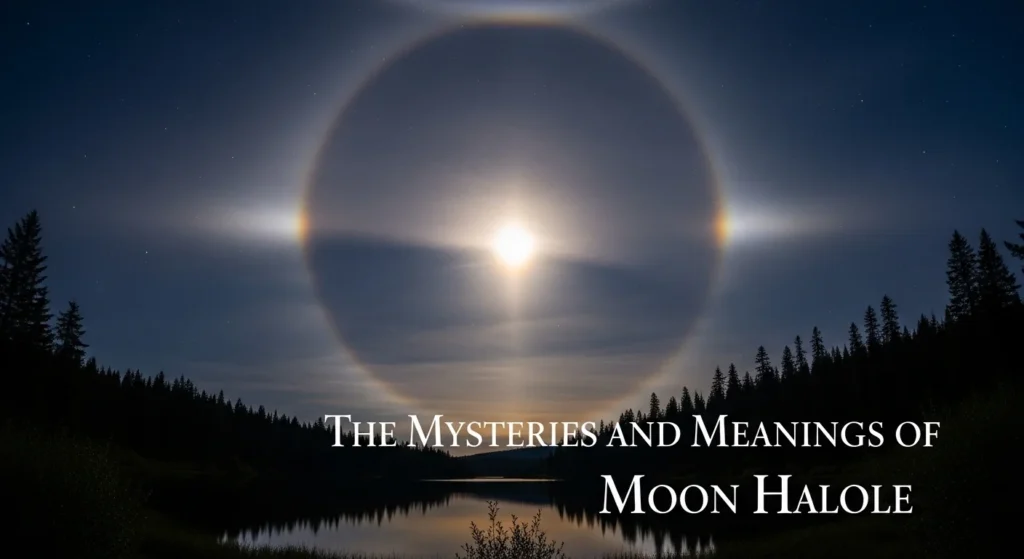
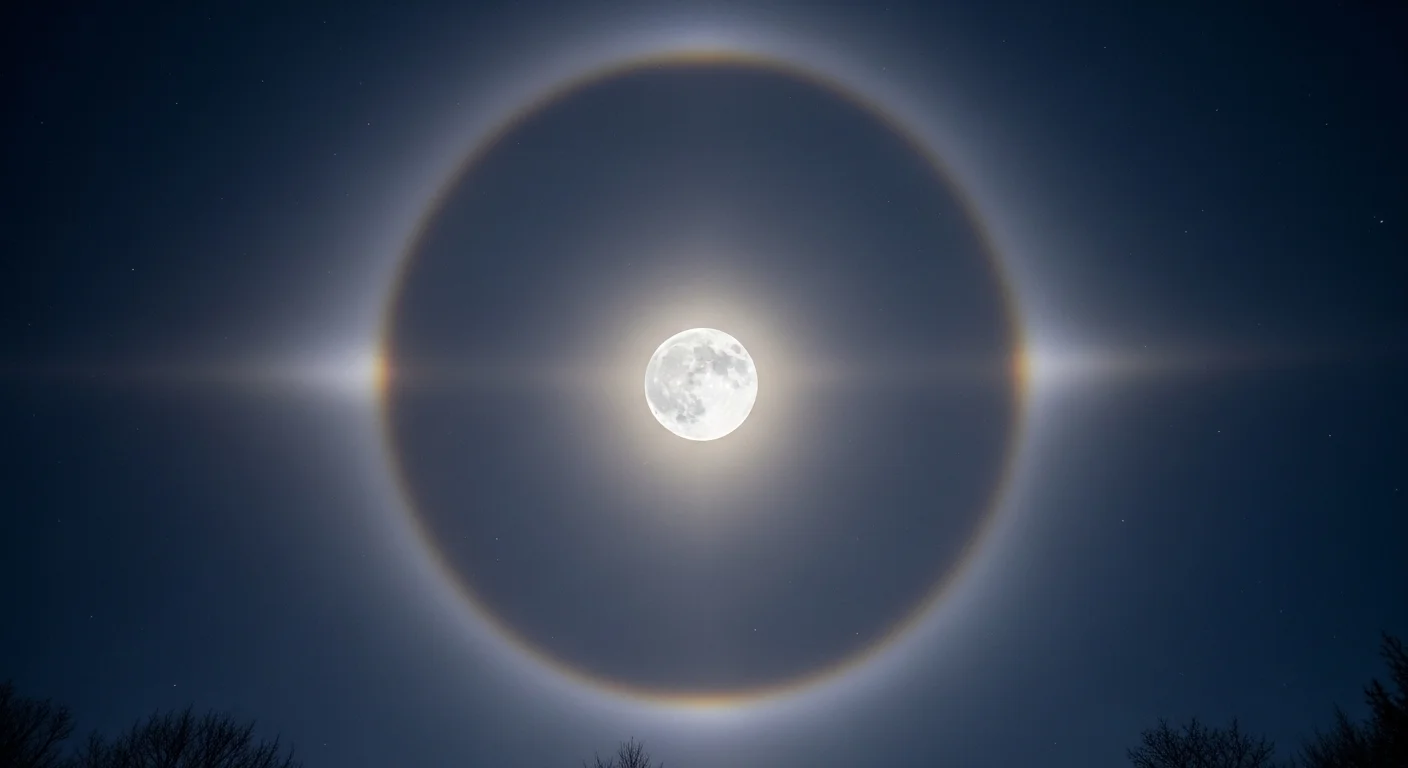
The Mysteries and Meanings of Moon Seeing a glowing ring around the moon—often called a moon halo—can stir deep curiosity, awe, or even unease in the heart. For many Christians, such signs in the heavens prompt questions: Is God speaking? Is this a warning, a promise, or simply a natural phenomenon?
The Bible teaches that while creation follows God’s natural order, the heavens also declare His glory (Psalm 19:1). Seeking a biblical and faith-based understanding of moon halos helps believers respond with spiritual maturity, peace, and discernment rather than fear or superstition.
![]()
Why Is the Moon Weird?
Many people describe the Moon as “weird” because of its unique characteristics. For example, the Moon appears almost the same size as the Sun in Earth’s sky, allowing total solar eclipses to occur. Its gravitational influence affects Earth’s tides, and it always shows nearly the same face to Earth due to a phenomenon called tidal locking.
These unusual features have inspired curiosity, scientific study, and speculation throughout history. From a biblical perspective, the Moon is part of God’s creation and serves as a light in the night sky.
Genesis 1:16 says:
“God made two great lights—the greater light to govern the day and the lesser light to govern the night.”
Flat Moon Theory
The Flat Moon Theory is a fringe idea that claims the Moon is flat rather than spherical. However, scientific observations strongly support that the Moon is a roughly spherical celestial body.
Evidence includes:
- Photographs from space missions.
- Observations during lunar eclipses.
- Telescopic views from Earth.
- Measurements from spacecraft that have orbited and landed on the Moon.
There is no credible scientific evidence supporting the Flat Moon Theory.
Moon Secrets
The phrase “Moon secrets” often refers to mysteries and unanswered questions about the Moon. Some commonly discussed topics include:
- How the Moon formed.
- Its influence on Earth’s tides.
- The presence of water ice in permanently shadowed craters.
- Geological features on its surface.
- Future plans for lunar exploration.
While scientists continue to learn more about the Moon, many so-called “secrets” are subjects of ongoing research rather than hidden information.
Could the Moon Be a Spaceship?
The idea that the Moon could be a spaceship comes from speculative theories sometimes called the “Spaceship Moon” hypothesis. According to these claims, the Moon is an artificial object created by an advanced civilization.
However, there is no scientific evidence supporting this idea. Geological samples collected from the Moon, observations by spacecraft, and decades of research indicate that the Moon is a natural celestial body.
Scientists generally agree that the Moon formed billions of years ago, likely after a massive collision involving the early Earth.
Is the Moon Inhabited?
There is currently no verified evidence that the Moon is inhabited by humans, extraterrestrials, or other intelligent life forms.
Human missions have visited the Moon, but no permanent settlements currently exist there. Scientists have found no evidence of native life on the lunar surface.
Future space programs may establish research bases on the Moon, but as of now, it is not considered inhabited.
Moon Civilization
The concept of a “Moon civilization” usually refers to theories about intelligent societies living on or inside the Moon. These ideas appear frequently in science fiction, folklore, and conspiracy theories.
There is no scientific evidence that an ancient or current civilization exists on the Moon. Extensive observations, lunar missions, and surface studies have not revealed signs of cities, advanced structures, or intelligent inhabitants.
The Living Moon
The phrase “The Living Moon” is generally symbolic rather than scientific. It may be used in literature, mythology, or spiritual discussions to describe the Moon as if it were alive or possessing consciousness.
Scientifically, the Moon is not considered a living organism. It does not meet the biological requirements for life, such as growth, reproduction, metabolism, or cellular structure.
In poetry and symbolism, however, people often describe the Moon in human-like terms to express wonder and beauty.
Empty Moon
The “Empty Moon” theory suggests that the Moon may be hollow or largely empty inside. This idea gained attention through speculation about certain seismic readings recorded during lunar missions.
However, scientific studies indicate that while the Moon has a complex internal structure with layers and regions of varying density, it is not an empty shell. Current evidence supports the conclusion that the Moon has a solid crust, mantle, and core.
The Moon remains one of the most studied objects in the solar system, and available evidence strongly supports its natural origin and structure.
A Biblical Perspective on the Moon
The Bible presents the Moon as part of God’s orderly creation rather than as a mysterious inhabited object or artificial structure.
Psalm 104:19 says:
“He made the moon to mark the seasons, and the sun knows when to go down.”
This verse emphasizes the Moon’s role within God’s creation and the natural order of the universe. While many fascinating theories exist about the Moon, Christians are encouraged to evaluate claims carefully and seek truth through both wisdom and reliable evidence.
Biblical Background: Signs in the Heavens
Scripture repeatedly affirms that God uses the sky, sun, moon, and stars to reflect His power and communicate His purposes.
Key Biblical References:
“The heavens declare the glory of God; the skies proclaim the work of His hands.” — Psalm 19:1
“There will be signs in the sun, moon, and stars.” — Luke 21:25
“God made the two great lights—the greater light to govern the day and the lesser light to govern the night.” — Genesis 1:16
In biblical culture, celestial signs were viewed as reminders of God’s sovereignty, covenant faithfulness, and divine timing. While Scripture warns against astrology and divination, it encourages believers to observe creation with reverence and spiritual discernment.
The Mysteries and Meanings of Moon Spiritual Interpretations of Moon Halos
1. God’s Glory Revealed Through Creation
Bible Verse:
“The heavens declare the glory of God.” — Psalm 19:1
A moon halo can remind believers of God’s majestic creativity and order. For Christians today, it encourages worship rather than fear—calling hearts back to awe, gratitude, and humility before the Creator. It guides believers to see God’s fingerprints even in ordinary nights.
2. A Call to Spiritual Watchfulness
Bible Verse:
“Watch therefore, for you do not know what hour your Lord is coming.” — Matthew 24:42
Celestial phenomena can serve as gentle reminders to stay spiritually alert. For daily life, this means living faithfully, repenting quickly, and remaining attentive to God’s voice rather than becoming spiritually complacent.
3. God’s Covenant Faithfulness
Bible Verse:
“It will be a sign of the covenant between Me and the earth.” — Genesis 9:13
Just as the rainbow symbolized God’s covenant, a halo around the moon may remind believers that God remains faithful and unchanging. This interpretation offers reassurance that God keeps His promises, even in uncertain seasons.
4. Reflection of Light in Darkness
Bible Verse:
“The light shines in the darkness, and the darkness has not overcome it.” — John 1:5
The moon reflects the sun’s light, and the halo magnifies that glow. Spiritually, this points to Christ’s light shining through believers during dark times. Christians are encouraged to reflect Christ’s love, truth, and hope to others.
5. A Prompt for Prayer and Reflection
Bible Verse:
“Be still, and know that I am God.” — Psalm 46:10
A moon halo can prompt quiet reflection and prayer. Rather than seeking hidden meanings, believers are guided to seek God’s presence, ask for wisdom, and realign their hearts with Him.
The Mysteries and Meanings of Moon Examples and Variations of Moon Halos
The spiritual meaning may shift based on context:
Clear, bright halo: Peace, clarity, and divine order
Red or faint halo: Emotional intensity, reflection, or spiritual caution
Halo seen during prayer: Personal reassurance or invitation to deeper trust
Halo seen in dreams: Often symbolic of spiritual awareness, God’s presence, or a call to reflection
Meaning depends on emotions felt, surrounding events, and alignment with Scripture. Biblical symbolism always prioritizes God’s Word over personal interpretation.
The Mysteries and Meanings of Moon Dealing With Fear or Troubling Feelings About Moon Halos
Some associate moon halos with fear or impending events. Scripture reminds believers not to fear signs but to trust God.
Protective Scriptures and Prayers:
Psalm 91 – God’s shelter and protection
Ephesians 6:10–18 – The Armor of God against fear and deception
Psalm 23 – God’s comfort and guidance
Believers are encouraged to reject superstition, repent of fear-based thinking, cleanse their minds with Scripture, and pray for peace and discernment. Wise counsel from pastors or spiritual mentors helps maintain biblical balance.
The Mysteries and Meanings of Moon Faith-Based Guidance for Believers
1. Prayer for Protection
Example Prayer:
“Lord, I trust You as the Creator of heaven and earth. Guard my heart from fear and fill me with peace and understanding.”
2. Self-Examination and Repentance
Ask God to reveal areas of spiritual distraction, fear, or misplaced focus. Repentance restores peace and clarity.
3. Seeking Spiritual Support
Seek guidance from:
Pastors
Prayer partners
Mature Christian mentors
God often confirms truth through Scripture and godly counsel.
Frequently Asked Questions
Are moon halos signs from God?
They can serve as reminders of God’s glory and sovereignty, but should always be interpreted through Scripture, not superstition.
What does a moon halo mean spiritually?
Spiritually, it may symbolize reflection, God’s presence, or a call to prayer and watchfulness.
Is it biblical to fear signs in the sky?
No. Scripture teaches believers to trust God and not be driven by fear (Isaiah 41:10).
Can moon halos appear in dreams?
Yes. In Christian dream meaning, they often represent spiritual awareness, divine order, or reflection of God’s light.
Should Christians seek meanings in celestial signs?
Christians should seek God’s Word first, using discernment and avoiding astrology or divination.
Do moon halos predict events?
The Bible does not support using natural signs to predict the future. Trust in God’s sovereignty is key.
Conclusion
Moon halos remind believers that God reigns over both heaven and earth. While science explains how halos form, faith reveals who is in control. Rather than signs of fear, they can become invitations to worship, reflection, and renewed trust in God’s sovereignty.