
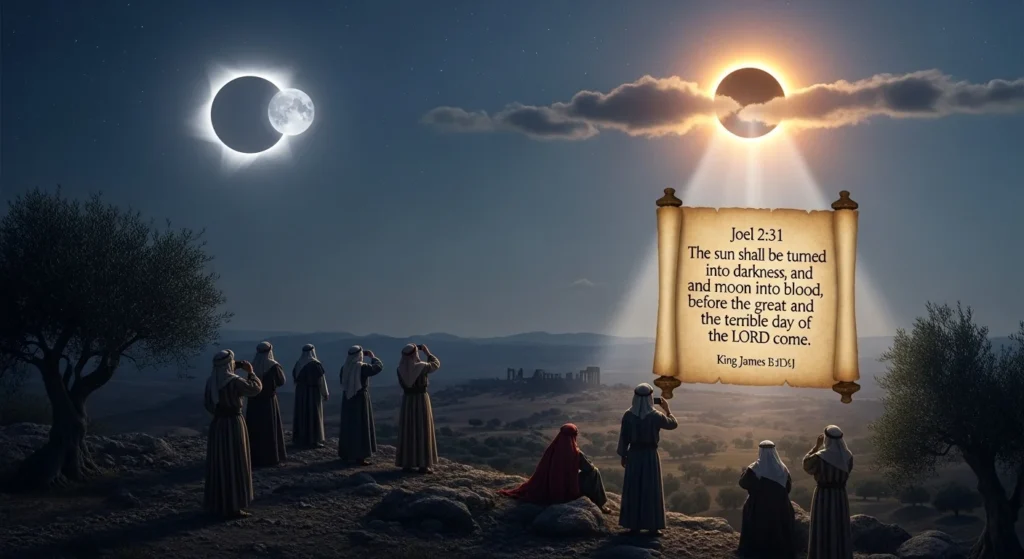

Lunar Eclipse Bible Meaning
The Bible does not specifically mention a lunar eclipse by name. However, it occasionally refers to unusual signs in the heavens, including descriptions of the moon becoming dark or appearing like blood. These passages often use symbolic language to emphasize God’s power and the significance of certain events.
For example:
“The sun shall be turned into darkness, and the moon into blood, before the great and the terrible day of the Lord come.” – Joel 2:31 (KJV)
From a biblical perspective, a lunar eclipse can remind believers of God’s sovereignty over creation and encourage reflection on His majesty and promises.
Solar Eclipse Bible Meaning
The Bible does not directly mention a solar eclipse as a scientific event. However, Scripture records instances when darkness covered the land and speaks of heavenly signs that demonstrate God’s authority over the universe.
One example is found in the prophecy of Amos:
“And it shall come to pass in that day, saith the Lord God, that I will cause the sun to go down at noon, and I will darken the earth in the clear day.” – Amos 8:9 (KJV)
Many Christians view solar eclipses as reminders of God’s creative power and the order of His creation rather than as predictions of specific future events.
What Does the Bible Say About Solar Eclipse?
The Bible does not provide instructions or doctrines specifically about solar eclipses. Instead, Scripture teaches that the sun, moon, and stars were created by God and serve as part of His magnificent creation.
“And God made two great lights; the greater light to rule the day, and the lesser light to rule the night.” – Genesis 1:16 (KJV)
Believers are encouraged to respond to natural wonders with awe, gratitude, and trust in God’s wisdom rather than fear or superstition.
Eclipse in the Bible: Revelation
The Book of Revelation contains symbolic descriptions of cosmic events, including changes involving the sun and moon. These passages use vivid imagery to communicate the seriousness of God’s judgment and the importance of spiritual readiness.
“The sun became black as sackcloth of hair, and the moon became as blood.” – Revelation 6:12 (KJV)
Many biblical scholars understand these descriptions as symbolic apocalyptic language. The Bible’s primary message is not to create fear of eclipses but to encourage faithfulness and hope in God.
What Does the Bible Say About Lunar Eclipse?
The Bible does not identify lunar eclipses as signs that automatically predict specific events. However, passages about the moon remind believers that God rules over the heavens and history.
Jesus said:
“And there shall be signs in the sun, and in the moon, and in the stars.” – Luke 21:25 (KJV)
Christians are encouraged to approach celestial events with wonder and reverence while placing their confidence in God rather than in speculation about signs.
Eclipse Meaning
An eclipse is an astronomical event in which one heavenly body moves into the shadow of another or blocks its light. A solar eclipse occurs when the moon passes between the earth and the sun, while a lunar eclipse happens when the earth’s shadow falls on the moon.
Spiritually, some people view eclipses as reminders of the greatness and order of God’s creation.
“The heavens declare the glory of God; and the firmament sheweth his handywork.” – Psalm 19:1 (KJV)
The Bible encourages believers to see creation as a testimony to God’s wisdom and power.
Revelation 6:12
Revelation 6:12 describes dramatic events that occur when the sixth seal is opened:
“And I beheld when he had opened the sixth seal, and, lo, there was a great earthquake; and the sun became black as sackcloth of hair, and the moon became as blood.” – Revelation 6:12 (KJV)
This verse is part of apocalyptic imagery in the Book of Revelation. It emphasizes God’s authority and the seriousness of His purposes in history. Christians interpret this passage in different ways, but most agree that its central message calls people to reverence, faith, and trust in God.
Eclipses
Eclipses are remarkable events that demonstrate the precision and order of the universe. The Bible does not teach that every eclipse is a direct message or prediction. Instead, Scripture repeatedly points believers toward the Creator who governs the heavens.
“Lift up your eyes on high, and behold who hath created these things.” – Isaiah 40:26 (KJV)
For Christians, eclipses can serve as reminders of God’s greatness, the beauty of creation, and the importance of placing hope and confidence in Him.
Biblical Background
The Bible frequently mentions the sun, moon, and stars as signs and symbols of God’s work in the world:
Joel 2:31 – “The sun shall be turned into darkness, and the moon into blood, before the great and awesome day of the Lord comes.”
Matthew 24:29 – “Immediately after the tribulation of those days, the sun will be darkened, and the moon will not give its light, and the stars will fall from heaven, and the powers of the heavens will be shaken.”
Revelation 6:12 – “I looked when He opened the sixth seal, and behold, there was a great earthquake; and the sun became black as sackcloth of hair, and the moon became like blood.”
While these verses often describe prophetic or symbolic events, they indicate that the darkening of the sun is a spiritually significant phenomenon, sometimes signaling judgment, change, or divine intervention. Historically, solar eclipses were seen as omens, but in the biblical worldview, they remind believers that God controls the heavens and earthly events alike.
The Spiritual and Biblical Meaning of Solar Eclipses Spiritual Interpretations
Here are 4 spiritual lessons and meanings of solar eclipses according to biblical principles:
A Call to Repentance
“Turn to me and be saved, all the ends of the earth! For I am God, and there is no other.” – Isaiah 45:22 (ESV)
Solar eclipses can serve as divine reminders to examine one’s life. They call Christians to repentance, humility, and renewed faith in God’s guidance.God’s Sovereignty Over Creation
“He made the moon to mark the seasons; the sun knows its time for setting.” – Psalm 104:19 (ESV)
The eclipse illustrates that God governs all celestial bodies. It reminds believers that just as He orchestrates the cosmos, He is actively involved in the affairs of life and nations.Warning of Change or Transition
“For I know the plans I have for you, declares the Lord, plans for welfare and not for evil, to give you a future and a hope.” – Jeremiah 29:11 (ESV)
Just as the sun is temporarily darkened, eclipses may symbolize periods of transition or divine correction. Christians are encouraged to trust God’s timing and remain steadfast in prayer.Invitation to Spiritual Reflection
“Let the heavens be glad, and let the earth rejoice; let the sea roar, and all that fills it!” – Psalm 96:11–12 (ESV)
Witnessing a solar eclipse can inspire worship, reflection, and awe of God’s majesty. It’s an opportunity to deepen one’s connection with the Creator and meditate on His power and mercy.
The Spiritual and Biblical Meaning of Solar Eclipses Examples or Variations
The spiritual meaning of solar eclipses can shift depending on context:
Partial Eclipse: May symbolize a period of spiritual testing or partial revelation.
Total Eclipse: Often represents dramatic change, a call to repentance, or divine judgment.
Accompanied by Natural Events: Earthquakes, storms, or unusual signs may intensify the message as seen in Revelation 6.
Emotions, personal circumstances, and biblical symbolism also influence interpretation. For instance, feeling fear during an eclipse can become an invitation to seek God’s comfort, while witnessing awe can strengthen faith and gratitude.
The Spiritual and Biblical Meaning of Solar Eclipses Dealing With Negative Signs or Troubling Dreams
If solar eclipses appear in dreams or spiritual experiences with fear or foreboding:
Prayer for Protection and Peace
Psalm 91 – God’s protection from fear and harm.
Ephesians 6:10–18 – Armor of God to withstand spiritual attacks.
Psalm 23 – Comfort in God’s presence during uncertain times.
Repentance and Spiritual Cleansing
Confess sin and surrender worries to God.
Seek His guidance for clarity, protection, and spiritual discernment.
Seek Counsel and Fellowship
Share experiences with trusted pastors, mentors, or prayer groups.
Use communal prayer and scripture study to process spiritual impressions.
The Spiritual and Biblical Meaning of Solar Eclipses Faith-Based Guidance
Practical steps to respond to solar eclipses spiritually:
Prayer for Insight and Protection
“Lord, remind me of Your sovereignty. Protect my heart from fear and guide me through all seasons, light and dark.”
Meditation on Scripture
Reflect on verses about God’s power, control, and promise to never forsake His children.
Spiritual Journaling
Record thoughts, prayers, and impressions during celestial events to track spiritual growth.
Acts of Worship and Gratitude
Worship God, acknowledging His majesty over creation.
Share the experience with others to inspire faith and awe.